
Autism
Wondering About Early Signs of Autism?

As a parent, you know your child best. You notice the little things—how they respond to your voice, their facial expressions, and how they play, interact, and explore the world around them. If something feels “off” or different from what you’ve seen in other children, it’s completely natural to wonder whether it could be autism.…
Read MoreThe Limitations of a Psychoeducational Evaluation

It’s distressing to sit with parents after they’ve taken a long winding path, and they’re still searching for answers about their struggling child. They are frustrated and anxious. They may question the diagnosis given to their child or worry about minimal progress with tutoring or therapy. When the child had a prior psychoeducational evaluation, they…
Read MoreHow Does Your Child Process Signals from Their Body?

Does your child ignore, miss, or over attend to internal signals from their body, such as hunger, thirst, full bowel/bladder, body temperature, heart rate, breathing, pain, or muscle tension? Maybe it depends on their stress level or physical health. Interoception can be defined as the ability to perceive the internal state of one’s own…
Read MoreWhat’s After High School for Teens with Special Needs?

Young adults with a history of developmental differences may not follow the same path as their peers. It’s easy to feel lost when counseling centers and teachers focus primarily on transition to a 4-year college. This may not be the path your teen should take. You can start by looking at your teen’s strengths…
Read MoreIf Your Child Needs Help in the Public Schools…

There is a formal process for getting your child the help they need. The details will vary by state, but the general steps are similar. Also keep in mind that some schools have more resources than others, so delays can be quite long (e.g., 3-6 months or more). Begin to advocate as soon as possible!…
Read MoreYour Child’s Brain Imaging Explained
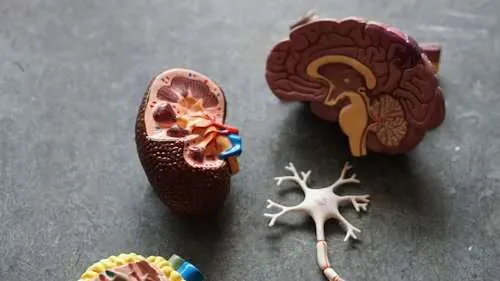
Brain imaging (neuroimaging) can be an incredibly helpful part of a neuropsychological evaluation, regardless of how long ago it was obtained and how small the findings. Even a small abnormality can help explain neurodevelopmental concerns, and normal findings are also helpful. Brain MRI or a head CT are the most common types of neuroimaging. Here…
Read MoreCurious About Autism Spectrum Disorder?

According to the CDC, 1 in 36 children in the United States has autism. This means that in every 2 classrooms, there is around 1 child with autism. Autism is incredibly complex because of its infinite variations. Really and truly, each child and young adult with whom I have been lucky to work is just…
Read MoreHow Do I Find the Right School for My Child?

Regardless of a child’s abilities, many parents worry about their educational setting at some point. Is your child getting enough support? Is your child being challenged? Are your child’s peers a good influence? If only there was a crystal ball… In some cases, families really know that their child’s school is not a good fit.…
Read MoreDoes My Child Need Help?

As parents, we can see our whole child. This includes their incredible, unique, and special characteristics, but also the ones that make us worry. Every child has both strengths AND weaknesses. Development is also really discontinuous. This means that some areas mature earlier than others, early concerns will resolve, and later concerns can show up. Even…
Read MorePsychoeducational vs. Neuropsychological Evaluation

If your child has been referred for a psychoeducational evaluation, you are likely noticing differences, delays, or problems at school. The goal of a psychoeducational evaluation is to evaluate intellectual functioning and academic functioning. Foundational language skills (e.g., phonological processing, verbal retrieval and fluency) may also be evaluated because weaknesses can contribute to a learning…
Read More