
Neurodevelopment
How Does Your Child Process Signals from Their Body?

Does your child ignore, miss, or over attend to internal signals from their body, such as hunger, thirst, full bowel/bladder, body temperature, heart rate, breathing, pain, or muscle tension? Maybe it depends on their stress level or physical health. Interoception can be defined as the ability to perceive the internal state of one’s own…
Read MoreEarly intervention for communication delays is critical!

A young child is changing rapidly during the first years of life, and some skills might develop more quickly than others. In the early stages of language development, it can be difficult for parents to know whether a child is delayed compared to peers. At what point should you get your child help? You might…
Read MoreWhat’s After High School for Teens with Special Needs?

Young adults with a history of developmental differences may not follow the same path as their peers. It’s easy to feel lost when counseling centers and teachers focus primarily on transition to a 4-year college. This may not be the path your teen should take. You can start by looking at your teen’s strengths…
Read MoreIf Your Child Needs Help in the Public Schools…

There is a formal process for getting your child the help they need. The details will vary by state, but the general steps are similar. Also keep in mind that some schools have more resources than others, so delays can be quite long (e.g., 3-6 months or more). Begin to advocate as soon as possible!…
Read MoreDo You Need A Second Opinion About Your Child’s Development?

Has your child already been evaluated by a psychologist or the school system, but you still have a lot of questions? Maybe you wonder about a diagnosis. Or maybe the evaluation was completed years ago, and you need an updated perspective. When it comes to understanding a child’s thinking, learning, behavior, emotions, executive functioning, academics,…
Read MoreYour Child’s Brain Imaging Explained
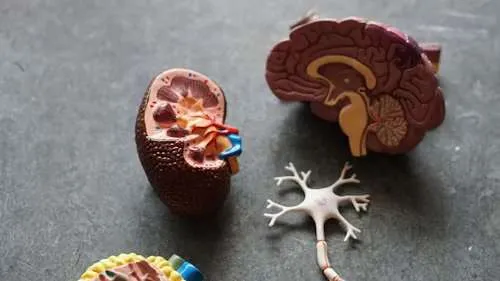
Brain imaging (neuroimaging) can be an incredibly helpful part of a neuropsychological evaluation, regardless of how long ago it was obtained and how small the findings. Even a small abnormality can help explain neurodevelopmental concerns, and normal findings are also helpful. Brain MRI or a head CT are the most common types of neuroimaging. Here…
Read MoreCurious About Learning Disabilities?

I am surprised how often learning disabilities (or learning disorders) are misunderstood. This label can be mistakenly used as a general description for a child who has any type of learning challenges, including by pediatricians and other medical doctors. But a learning disorder is actually a specific pattern in how a child’s overall cognitive versus…
Read MoreCurious About Autism Spectrum Disorder?

According to the CDC, 1 in 36 children in the United States has autism. This means that in every 2 classrooms, there is around 1 child with autism. Autism is incredibly complex because of its infinite variations. Really and truly, each child and young adult with whom I have been lucky to work is just…
Read MoreCurious About ADHD and ADD?

When a child or teen is struggling at school, parents often have questions about how attention problems (e.g., easily distracted, problems with focus or concentration, daydreaming) and behavior challenges (e.g., can’t sit still, too much energy, trouble with personal space, impulsive) could be related to an attention disorder, such as ADHD or ADD. A few…
Read MoreHow Do I Prepare My Young Child for School?

It can be such an exciting step to send your child to school for the first time! If you know your child has developmental differences, you may also have some worry. How do you make sure your child is ready? What can do you prepare your child? Here are some considerations below… Prepare for Structure,…
Read More