
Evaluation
Your Child’s Brain Imaging Explained
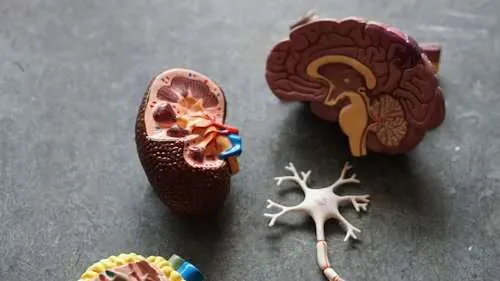
Brain imaging (neuroimaging) can be an incredibly helpful part of a neuropsychological evaluation, regardless of how long ago it was obtained and how small the findings. Even a small abnormality can help explain neurodevelopmental concerns, and normal findings are also helpful. Brain MRI or a head CT are the most common types of neuroimaging. Here…
Read MoreCurious About Learning Disabilities?

I am surprised how often learning disabilities (or learning disorders) are misunderstood. This label can be mistakenly used as a general description for a child who has any type of learning challenges, including by pediatricians and other medical doctors. But a learning disorder is actually a specific pattern in how a child’s overall cognitive versus…
Read MoreCurious About Autism Spectrum Disorder?

According to the CDC, 1 in 36 children in the United States has autism. This means that in every 2 classrooms, there is around 1 child with autism. Autism is incredibly complex because of its infinite variations. Really and truly, each child and young adult with whom I have been lucky to work is just…
Read MoreCurious About ADHD and ADD?
When a child or teen is struggling at school, parents often have questions about how attention problems (e.g., easily distracted, problems with focus or concentration, daydreaming) and behavior challenges (e.g., can’t sit still, too much energy, trouble with personal space, impulsive) could be related to an attention disorder, such as ADHD or ADD. A few…
Read MoreDoes My Child Need Help?

As parents, we can see our whole child. This includes their incredible, unique, and special characteristics, but also the ones that make us worry. Every child has both strengths AND weaknesses. Development is also really discontinuous. This means that some areas mature earlier than others, early concerns will resolve, and later concerns can show up. Even…
Read MorePsychoeducational vs. Neuropsychological Evaluation

If your child has been referred for a psychoeducational evaluation, you are likely noticing differences, delays, or problems at school. The goal of a psychoeducational evaluation is to evaluate intellectual functioning and academic functioning. Foundational language skills (e.g., phonological processing, verbal retrieval and fluency) may also be evaluated because weaknesses can contribute to a learning…
Read MoreWhy can’t my child retain information?

This is what I hear from parents… Oftentimes the most difficult type of learning and memory is called rote learning. This is learning that has very little content or meaning. As a result, students tend to just review and try to memorize the material, such as with spelling words. While some students can memorize spelling…
Read MoreWhen you get a new diagnosis for your child…

Has your child been diagnosed with a neurodevelopmental disorder, such as ADHD, autism spectrum disorder, intellectual disorder, or a specific learning disability (also called dyslexia, dyscalculia or dysgraphia)? Many of these disorders tend to co-occur and they are highly heritable in families. Children with medical conditions are at higher risk of neurodevelopmental disorders as well. …
Read MoreIs Therapy Working?

Families often feel overwhelmed with the types of therapies and number of specialists available to support their child. They question what to prioritize, and how to spend their time and money. Even the word therapy is confusing because it can be used for many types of professionals and services, all the with the goal of…
Read MoreIs Your Child with a Medical Condition Misunderstood?

It’s common for parents to request a neuropsychological evaluation after they’ve worked with many professionals. Families express confusion and frustration. They just want answers, and they want to know how to help their child! Here is a fictitious example that is common for a child with a medical condition: Bobby was born with cerebral palsy…
Read More