The Importance of Reading Aloud to Your Child
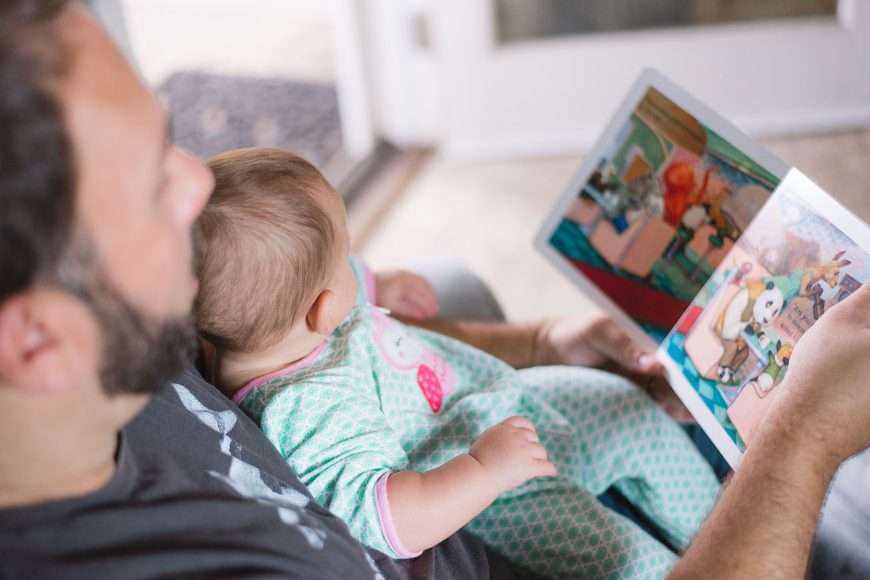
Start as early as possible (even at birth), make it part of your daily routine, and continue as long as your growing child enjoys it (early adolescence)!
Research has shown that reading aloud to your child:
- Strengthens your emotional bond.
- Builds your child’s vocabulary, which helps with comprehension and communication skills.
- Helps improve social and emotional skills.
- Can help remediate language delays and reading problems.
Reading aloud to your child before kindergarten makes a critical difference in language development. Here are estimates for number of words a child will be exposed to based on reading frequency through age 5 years:*
- 4,662 words if read to less than 1 time per month
- 63,570 words if read 1-2 times a week
- 169,520 words if read 3-5 times a week
- 296,660 words if read every day
- 1,483,300 words if read multiple books every day
*See the original article: Logan, J. A., Justice, L. M., Yumus, M., & Chaparro-Moreno, L. J. (2019). When children are not read to at home: The million word gap. Journal of Developmental & Behavioral Pediatrics, 40(5), 383-386.
Functional brain imaging studies show:
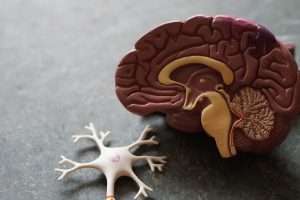
When parents read aloud to their young child, brain regions related to reading skills are activated even before the child can read. Brain activation also occurs in areas responsible for vocabulary and language skills, attention and executive functioning, as well as visual processing.
Tips for reading aloud to infants, toddlers, and pre-verbal children:
- Reduce other nearby distractions to help focus attention on the book.
- Use a playful tone of voice, inflection, gestures, and sound effects while pointing and naming the pictures.
- Respond to or copy the child’s facial expressions and vocalizations.
- Allow them to explore the pages with mouthing/chewing, patting, or grabbing the book; help them turn the pages and point to the pictures.
- Follow the child’s lead when they show a specific interest.
- Don’t worry about reading all the text or in the correct sequence.
Tips for reading aloud to a verbal child:
- Encourage and practice rhyming with words
- Prompt your child to say something about the story
- Give feedback and support their ideas
- Expand on their responses
- Create connections between the book and the things they know
- Ask open ended questions (i.e., try who, what, when, where, why questions)
- Talk about emotions in the story and relate to the child’s personal experiences
- Stay positive and praise your child
- Once your child is learning to read (or reading independently), continue reading aloud to your child as long as possible. This supports cognitive and emotional development in ways that are different than when the child reads independently.
Tips for selecting books:
- For infants, toddlers, and preverbal children, use books with larger pictures and illustrations or simple stories; board books, and those made of different textures, fabrics, and materials safe for exploring with their mouth are great choices.
- Use books that allow interaction, such as with pop-ups and lift-the-flap books.
- Use your child’s interests and hobbies to guide how you select books.
- Consider stories that share a lesson or experience with which your child can relate.
- Try both fiction and nonfiction books.
- Consider books without words. In young children, this can help focus attention on the pictures. In older children, take turns telling the story to encourage language development and creative thinking.
Watch your child’s behavior for clues while reading together.
This will help you see what sparks their interest, curiosity, and joy. If they are getting fidgety and distracted, it may be time to stop reading. Notice how long they can pay attention to the story and adjust your approach to support their engagement.
Finding books for your child:
Visit your local public library for a membership to borrow free books and explore programs for kids (e.g., story time, summer reading programs, and homework help). Ask your librarian about how to find books for your child’s age and interests. Learn more about the Georgia Public Library website: https://georgialibraries.org/kids/
You can build a collection of affordable books for home by purchasing used books from local thrift stores, used bookstores, some online stores, and garage sales. Give an old book a new life, and then pass it on when you are done with it.
Ever notice those cute little houses filled with books and scattered around the neighborhoods? Read about and search for your closest Little Free Library to exchange free books with others: https://littlefreelibrary.org/