Early Signs of Dyslexia
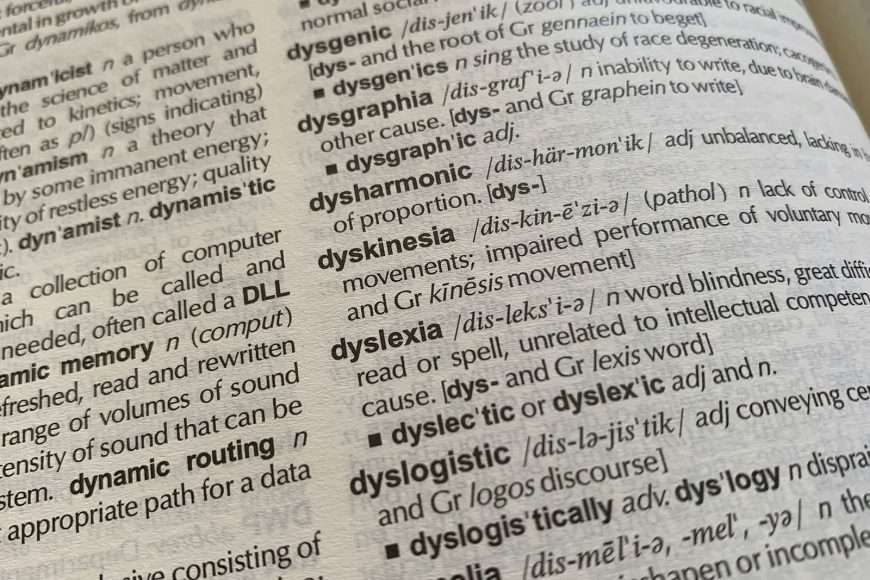
Dyslexia is a language-based learning disability that affects reading, and it often affects writing, spelling, and aspects of spoken language as well. These difficulties are due to weak processing and manipulation of the sounds of language, despite typically developing cognitive or intellectual functioning. In other words, reading challenges are unexpected in the context of the child’s abilities.
Have you ever known someone who has a hard time with Pig Latin? I can’t do Pig Latin! This playful coded language requires someone to move sounds in their mind to speak and interpret what someone is saying. This is a simplified example of how a child with dyslexia struggles with the smallest units of sound when learning to read and write.
Dyslexia affects around 15-20% of the population – that’s about 1 in 5 people! The impact of dyslexia can range from mild to very severe, but it can contribute to significant educational challenges. Neuroimaging has played an important role in helping scientists understand why individuals with dyslexia struggle with reading. Extensive and growing research shows the brain of an individual with dyslexia is different in structure and function, but effective reading intervention (i.e., structured literacy) can normalize and improve connectivity patterns in the brain.
The timing of intervention to help an at-risk reader is CRITICAL. Children are no longer learning to read but reading to learn by 3rd grade. Early identification is the first step to getting help.
Signs of dyslexia can vary across development and into adulthood. Listen to your child read aloud and notice the types of errors they make.
Depending on age, children should be able to:
| READING |
| Recognize and produce rhyming words |
| Recognize and name letters (despite lots of practice and repetition) |
| Match letters to sounds |
| Understand and “hear” the difference between sounds in words |
| Accurately blend letter sounds or phonemes (the smallest unit of sound) within words |
| Recognize and remember sight or printed words (despite lots of review) |
| Distinguish between letters and words that look similar |
| Keep their place and not skip words while reading |
| Read aloud with fluency and ease, changing the prosody or rhythm of their speech without stumbling or halting too much |
| Read at an age typical pace and understand the material without difficulty or fatigue |
| WRITING |
| Write letters, numbers, and symbols correctly (letters and numbers are normal when younger) |
| Learn to copy and write at an age-appropriate level |
| Spell words correctly and consistently most of the time (despite practice) |
| Complete handwriting tasks without too significant fatigue or frustration |
| OTHER |
| Sequence information, such as the days of week, months of year, or the steps of a task. |
| Understand directionality, such as left and right and other types of spatial orientation (e.g., directions from one location to another). |
Unlike other neurodevelopmental disorders where we don’t know exactly how to approach symptoms and concerns, we know what to do when a child is diagnosed with dyslexia! But first, you child needs an accurate diagnosis.
It can be challenging to make a dyslexia diagnosis in some children who show milder forms. It can also be VERY challenging to diagnose dyslexia when a child has a medical condition that is associated with scattered neurodevelopmental strengths and weaknesses, under which a learning disability can be masked. In these children, dyslexia can be missed with school-based evaluations.
A neuropsychological evaluation is extremely helpful for diagnosing children with dyslexia. Reach out to us for a free consult if you believe your child may be showing signs of dyslexia: [email protected]
Also visit the Georgia chapter of the International Dyslexia Association to learn more: https://ga.dyslexiaida.org/